 |
 |
| |
|
THE ONLY WAY TO TRAVEL
It is hard to imagine that in the early decades of the 20th century America could only be reached by sea. The liners built at that time represented advances in both technology and design that out-matched the architecture of land-based buildings.
The market demand was for cheap transport of immigrants, from Europe to the New World, on a massive scale. Between 1900-1915 more than 12 million Europeans were shipped across the Atlantic to start a new life. But it is not this volume of passengers that is remembered but the luxury afforded by a few. |
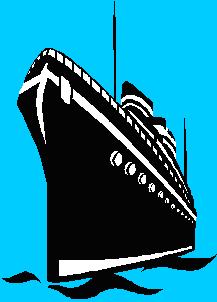 |
Scheduled shipping line services became practical with the introduction of steam to replace sail, but the subsequent development of the steam turbine by Parsons made it easy to generate electricity onboard and thus enjoy some of the associated devices we take for granted today. Refrigeration of food, passenger lifts, telephone systems, lighting, were all quickly incorporated in these transatlantic liners. |
Research by the Heritage Group has just started on the electrical services, particularly electric lighting, designed for these super ‘blue riband’ liners that sailed across the Atlantic. These ships were mainly built in Europe by Britain, France, Germany and Italy. Any information, books and /or references that would be relevant to this research would be gratefully received.page 1
|
|
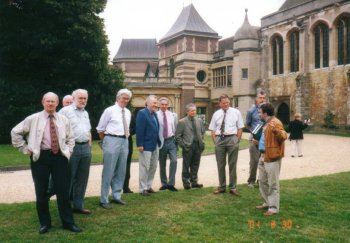
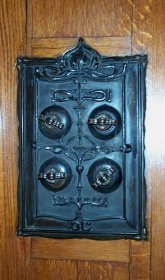
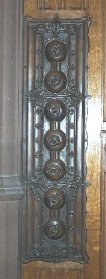
The HG summer visit was to Eltham Palace in London. Thanks to David Drewe, English Heritage for the organisation and also to Trev Bosman who was the tour guide. |
  |
Manufacturing the Weather, a company |
|
page 2
|
|
Since the Heritage Group embarked
on their project to check out various Churches
and other buildings from the Victorian
and Edwardian periods, many more examples of early
heating and ventilating equipment and /
or memorabilia in these buildings
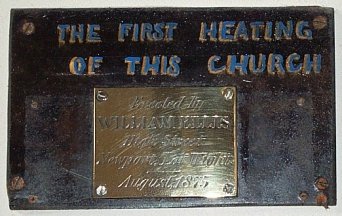
have been found. Below are a few more of the examples
discovered.
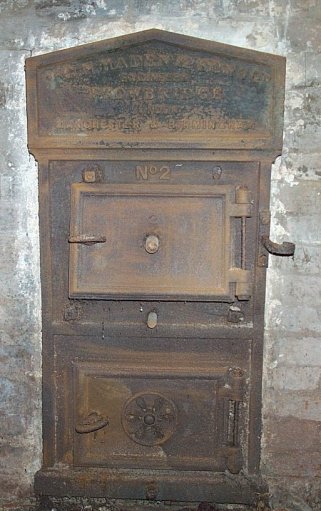
A G N Haden & Sons Ltd Warm Air Stove system dated 1860 complete with builders ducts and floor gratings in a Church on the Isle of Wight
|
Fresh air inlet ventilation duct (called a Tobin Tube) in a Truro Cornwall Chapel similar to the type shown in the Walter Jones 1904 book ‘Heating by Hot Water |
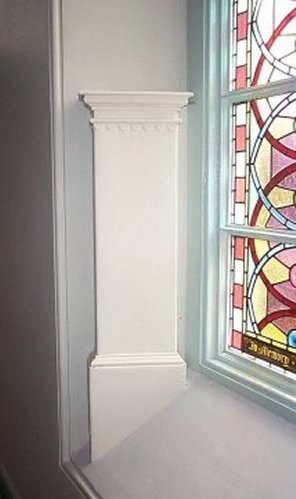
Pedestal Cast Iron box enclosure covering a finned radiator in a Trowbridge Wiltshire Church. 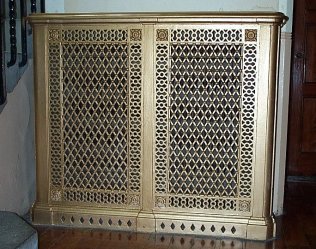 |
|
|
|
|
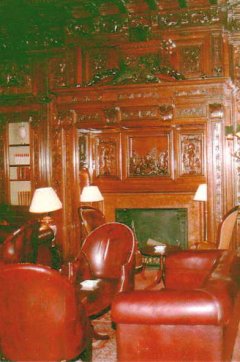
No 5 Hamilton Place, just off Park Lane
London built in 1805 was designed by the architect Thomas
Leverton and is a fine example of a Georgian town house built in that
period.
The house underwent a major refurbishment in
1878 carried out by the then owner Leopold de Rothschild during which
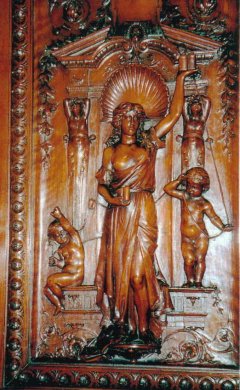
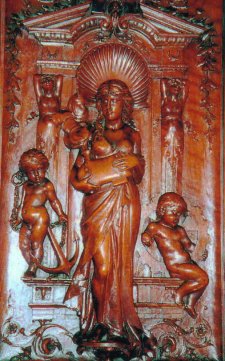
the Library and Staircase were finished In the Library sited above the fireplace there are two wood panels with intricate carvings both of which have particular engineering flavour. The left hand panel shows a Grecian goddess
holding aloft what appears to be a pair of batteries in her left
hand with a connecting wire trailing around the
two cherubs on either side of the goddess to
another pair |
of batteries in her right hand. Both cherubs
appear to have some form of ear piece in their right ears.
Was this carving inspired by the invention of the telephone in 1876 by Alexander Graham Bell? The right hand panel shows another Grecian goddess holding a small boiler shaped appliance with steam/smoke appearing to issue forth from a small chimney? The left cherub is holding an anchor and chain, and the right cherub a toothed paddle wheel. Was this carving inspired by I K Brunel’s ship the “Great Eastern” launched in 1856 and then later converted to lay cables. It laid the first transatlantic telephone cable circa. 1868. Thanks are given to Keith Wallis Consulting
for providing this article for inclusion.
|
|
|
|
CONTACTS
Chairman Brian Roberts Tel No: 01737 – 812914 e-mail <bmroberts@cwctv.net> |
page 4