

Building Services Heritage Group
|
The Heritage Group has recently compiled a
detailed history of Carrier Engineering Company Ltd, 1921-70, the UK
air conditioning contractor and manufacturer. The Group has an
extensive collection of
Carrier UK catalogues, papers and photographs.
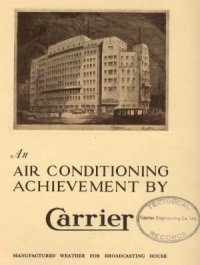
The illustration below is the front cover of
a 1931 brochure detailing the services provided at the new BBC
Broadcasting House in London's Portland Place: "There are 32 fans
handling 614 tons of air per hour, 16 pumps delivering 641 tons of
water per hour under
pressure, 54 electric motors having a combined capacity of 504 hp,
sheet
metal ducting weighing 120 tons, and 60 independent automatic
controls."
 |
Research continues on the early heating of
glasshouses.
The illustrations below are 1) the cover of a 1900 catalogue of Mackenzie & Moncur, Hothouse Builders and Heating & Ventilating Engineers of Edinburgh, and 2) an advert c.1890 for W & S Deards, Heating and Horticultural Engineers of Harlow Essex, 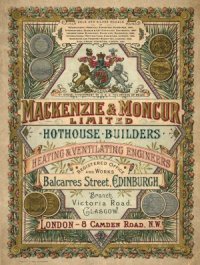 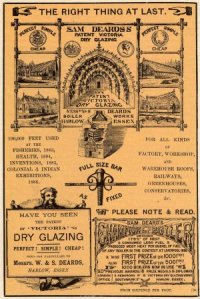 |
The Heritage Group is also continuing its
research on the air conditioning of theatres and cinemas up to 1939.
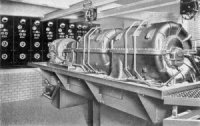
The photograph below (from the HG Collection) is of the Carrier centrifugal water chiller installed in the Carlton Theatre in the Haymarket, London in 1927. 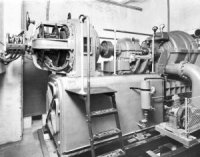 This photograph (from the HG Collection) is
of the British Thomson-Houston 200 TR water-vapour refrigeration
machine
installed in the Odeon Cinema in Leicester Square, London in 1937.
 |
page 1
ROYAL VICTORIA
HOSPITAL BELFAST
|
At the invitation of the Estates Department
of the Royal Hospitals Belfast several members of the Heritage Group
attended a CIBSE Northern Ireland Regional Meeting at the Royal
Victoria Hospital Belfast for an evening presentation about the
engineering services in the original part of the hospital, which dates
from 1903.
This hospital is a Landmark Building in building engineering services and lays claim to being the first “Air conditioned Building in the World”. 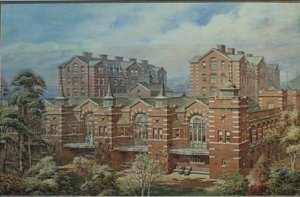 The architects Henman and Cooper a Birmingham practice were invited to put forward their design for this hospital and in conjunction with the Consulting Engineer Henry Lea also from Birmingham, created a pioneering revolutionary design for the form and layout of the hospital wards and their ventilation. Until then all hospital wards were based upon an open plan layout with openable windows. William Henman applied in his design the “Plenum” ventilation system of William Key which had already been used at the Birmingham General Hospital but this time rearranging all the Wards into one single linked building. Each ward was of single storey design having a pitched roof with glazing and connected to a spine corridor which provided the access. Each Ward was independently supplied with its own ducted fresh air through builders ducts having inlets at high level. In the pitched roof the vitiated air was allowed to exfiltrate through roof turrets. The positive pressure supplied by the fresh air ensured that only treated air from the central ventilation plant was breathed by the patients before it was exhausted to atmosphere. 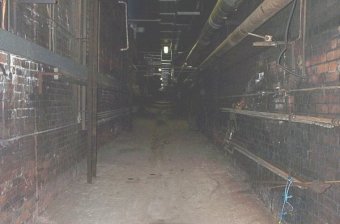 THE WALKWAY ‘PLENUM’ SUPPLY DUCT
The central ventilation plant drew in full fresh air which was washed by passing it through coconut fibre ropes kept wetted by a sprinkler system of supply pipes. The air then was then heated by a steam heater battery before being supplied to the Wards through a large |
underground brickwork walkway duct,
(the Plenum) which tapers in height from approx. 6 metres at the supply
end
down to 2 metres minimum.
Each separate pair of Wards had their own supply side duct which was fed off from the main plenum duct. Steam fed booster heater batteries were fitted at the entry position of each side duct to provide additional heating as necessary to offset any heat losses within the main plenum duct. The motive power for the supply ventilation system is provided by two steam engines of Victor Coates manufacture. The steam engines in turn drive the large supply fan which is of Davidson’s ‘Sirocco’ pattern manufacture. 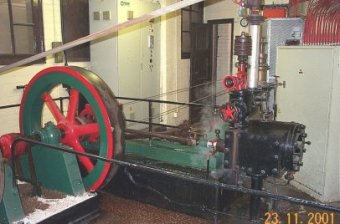 ONE OF THE VICTOR COATES STEAM ENGINES Samuel Davidson the inventor of the forward
bladed “Sirocco” patented centrifugal fan is thought to have been
involved in
the design process of the ventilation system.
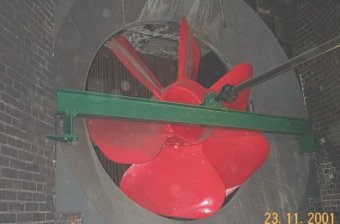 THE DAVIDSON ‘SIROCCO’ SUPPLY AIR FAN Hospital records show that a continual
daily check was kept of temperature and humidity in the Wards, which
was then maintained by altering the amount of wetting and
heating of
the treated air being supplied to the Wards.
The fact that temperature and humidity was monitored by checking the room conditions in the Wards with a subsequent response from the maintenance engineers to maintain the room conditions, allows this Hospital to lay claim to being the first air conditioned building in the world. That these hospital wards are still in use today nearly 100 years after their opening is a tribute to the innovative design concept of the original Architect’s design team of Henman and Cooper with their Consulting Engineer Henry Lea. |
page 2
MORE
DISCOVERIES
ON CHURCH HEATING
ON CHURCH HEATING
The
Heritage Group continues with its project to
seek
out and discover Churches and other fine buildings from
the
Victorian and Edwardian periods, which still retain
examples
of early heating and ventilating equipment
or
memorabilia. Shown below are a few more of the items discovered.
Whilst zapping around the cable channels the Chairman chanced upon an old Black & White film from 1938 about a young Doctor, titled “The Citadel” by A J Cronin. Amazingly in the film there is a camera shot looking over the shoulder of someone who is sorting through invoices on a writing desk. Clearly readable on the desk are three papers with a G N Haden & Sons Ltd letter heading. Are there any film buffs out there who may have knowledge of how or why this occurred. If so the Editor would like to hear from you.
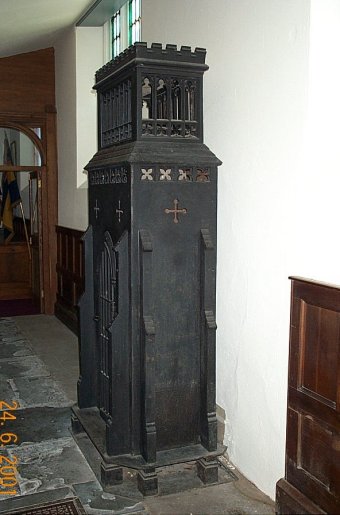
| Gothic style warm
air stove by Robert Howden in a Worcestershire Church dated about 1830
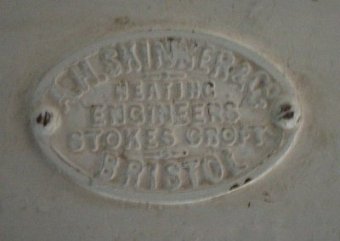
Nameplate of the firm who
installed the heating system in a Somerset Church circ. 1890.
|
Charles Portway Tortoise slow
combustion stove in a Somerset Church circa. 1880 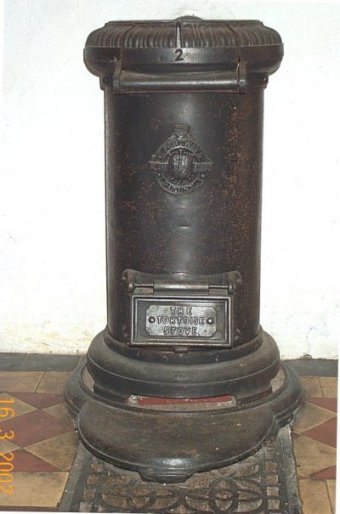 Arrangement of cast iron header boxes
in the Church which allows the pipework to change size, direction and levels. 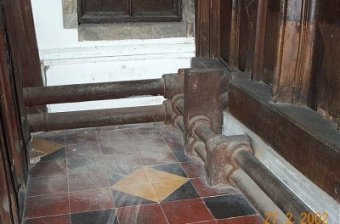 |
CELLULOID BULDING SERVICES AT THE CINEMA
Whilst zapping around the cable channels the Chairman chanced upon an old Black & White film from 1938 about a young Doctor, titled “The Citadel” by A J Cronin. Amazingly in the film there is a camera shot looking over the shoulder of someone who is sorting through invoices on a writing desk. Clearly readable on the desk are three papers with a G N Haden & Sons Ltd letter heading. Are there any film buffs out there who may have knowledge of how or why this occurred. If so the Editor would like to hear from you.
page 3
The Heritage Group’s own website www.hevac-heritage.org
is now running on the Internet and it is hoped that the site can be
updated each month as new discoveries are made. Links have been
set up in both directions with the official CIBSE
website.
By visiting the website www.hevac-heritage.org/usage/
it is possible to see how many hits have been made to the website each
month. |
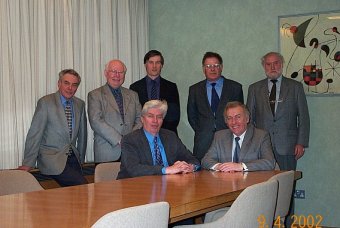 Heritage Group members in reflective
mood
|
|
The
Heritage Group is looking into the possibility of preparing and
producing
a CD-Rom which will show the contents of the Website
together
with other written and photographic historical
H&V
data.
The
Heritage Group is in the process of preparing an illustrated list of
Past
Presidents of the Institution up to 1976 with photos
and
a mini- biography.
The HG would welcome any thoughts, ideas or suggestions on the creation of a Logo for the Group, which could be used to give an identity to all the Heritage Group’s Papers, Articles, Newsletters and Website. In
April Mike Barber gave a lecture to the Merseyside and North
Wales CIBSE region illustrating the recent activities of
the Heritage
Group.
|
Projects in
Progress Biography
of Wilson Weatherley Phipson a Victorian Heating Engineer 1838 – 1891
Manufacturing the Weather, a company History of Carrier Engineering Ltd, UK 1921 – 1970. The Heat Makers. A history of the original / earliest heating companies. The history of 19th Century Glasshouse Heating. The Municipal Technical Institute Belfast. Histories of the Belfast, Northern Ireland firms of Davidson and Musgrave. Church Heating systems from the Victorian & Edwardian periods. Lighting and Electrical Services in the Great Ocean Liners. Air Conditioning of Theatres and Cinemas pre-1939. |
page 4